Course finder
Welcome to Kingston Business School
The competition for jobs and career opportunities in our global, inter-connected economy is intensifying. The challenge for professionals of the future is to stand out in a crowded marketplace. Everything we do at Kingston Business School is designed to equip you with the employment skills, the network, the resources and the opportunities to excel and to realise your goals.
We believe that professional success is shaped by honing your personal capacity and skillset, supported by the academic framework of knowledge. Through vocationally rich, employer-engaged and research-informed courses, we work alongside our students to help them meet personal goals and career ambitions; and become recognised for their distinct approaches and attitude to business.
Who do you want to be?
Featuring heartfelt accounts from both staff and students, this inspiring clip showcases the transformative academic experiences that define our community.
At Kingston Business School we lead
At Kingston Business School, we lead, challenge, inspire, innovate, learn, grow… The possibilities are endless. What could you do?
Our vision: innovative, entrepreneurial and life-changing
To be recognised globally for an innovative and entrepreneurial approach to education and research creating and realising life-changing opportunities.
Our values: excellence in staff and student experience
We value excellence in staff and student experience, learning and research; we value innovation, creativity and entrepreneurial thinking in the generation and implementation of ideas; and we value diversity, collegiality, and responsibility.
Why choose Kingston Business School?
Our students are sought-after, future-focused leaders who actively challenge, change, create and collaborate in order to contribute to society and impact upon the economy as business influencers and job creators.

Challenge
We encourage our students to challenge perceptions and perspectives. We aim for our students to actively analyse, question, interpret and innovate.

Change
At Kingston Business School, we are continually looking ahead to interpret the future and support people to meet emerging challenges. We motivate students to be problem solvers and influencers, who can get the best out of themselves and others.

Create
As the impact of digitalisation and IT impacts upon the business environment and change continues to affect our future, we prepare students to cultivate an enterprising mind set to identify and embrace potential opportunities.

Collaborate
We equip students to develop their creative capacity and a collaborative attitude to work successfully within multidisciplinary teams and environments. We are also proud to work with a number of international strategic collaborative partners.
Department of Management
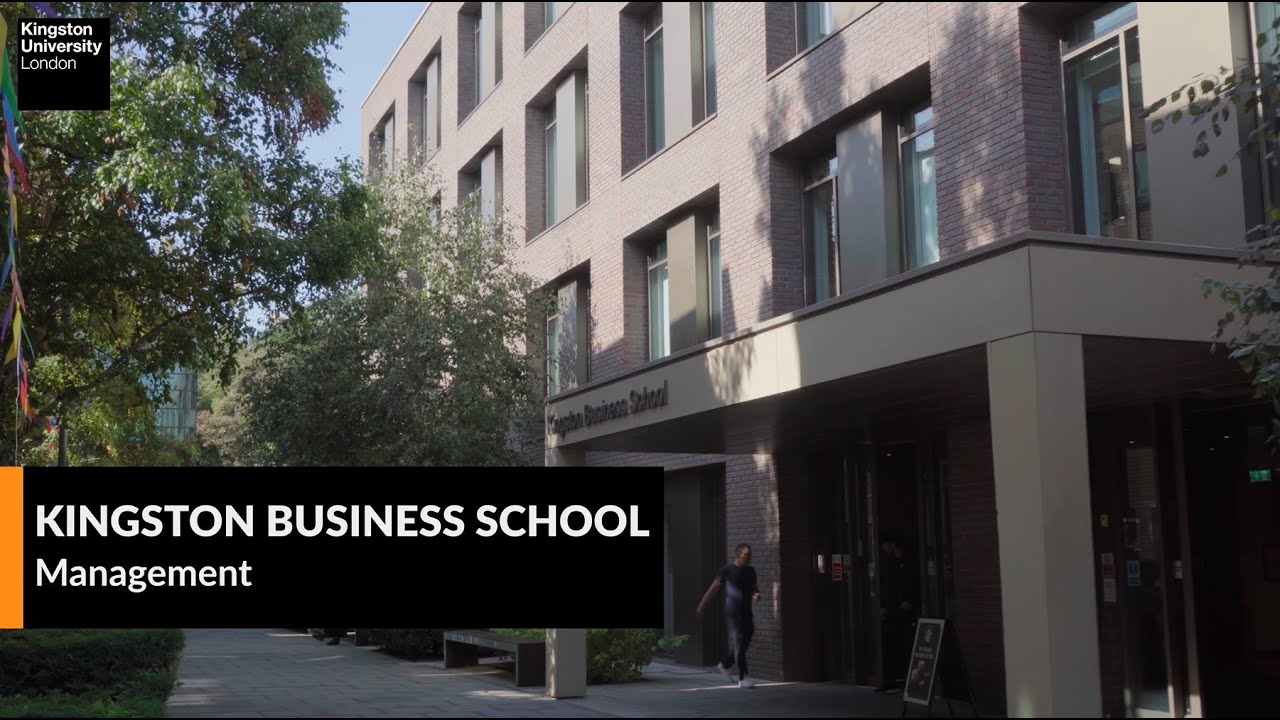
The Department of Management offers a broad range of accredited undergraduate and postgraduate courses covering all areas of business, from human resources and finance, to marketing, logistics and management.
Our programmes are developed in consultation with industry practitioners and alumni to ensure that your studies are future-facing and enable you to thrive, whether your ambition is to start your own company or become a senior leader in a global organisation.
Department of Management
The Department of Management offers a broad range of accredited undergraduate and postgraduate courses covering all areas of business, from human resources and finance, to marketing, logistics and management.
Our programmes are developed in consultation with industry practitioners and alumni to ensure that your studies are future-facing and enable you to thrive, whether your ambition is to start your own company or become a senior leader in a global organisation.
Department of Strategy, Marketing and Innovation
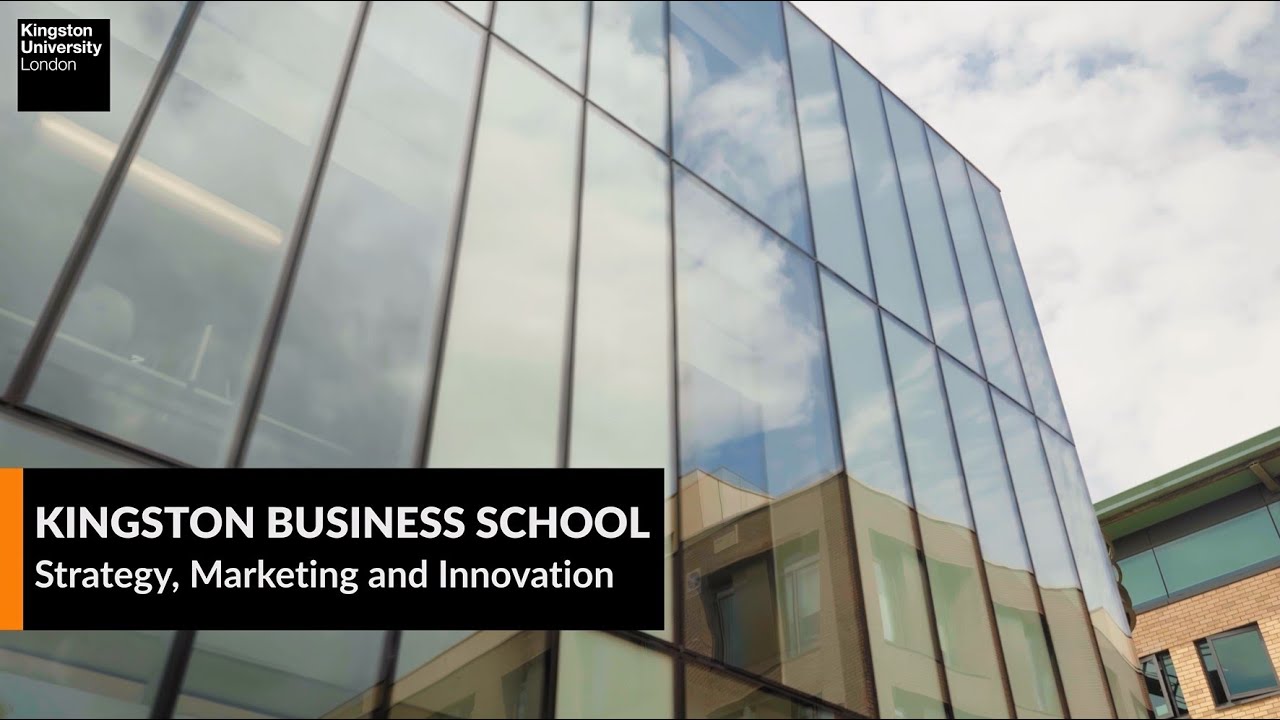
The Department of Strategy, Marketing and Innovation is comprised of passionate and enterprising academics from a diverse range of backgrounds. Our undergraduate and postgraduate qualifications bring together research, practitioner insights and teaching expertise in the disciplines of marketing, international business, entrepreneurship, strategy and innovation.
Our courses are truly experiential, providing you with opportunities to undertake company visits, attend networking events and hear best practice from industry guest speakers.
Department of Accounting, Finance and Informatics
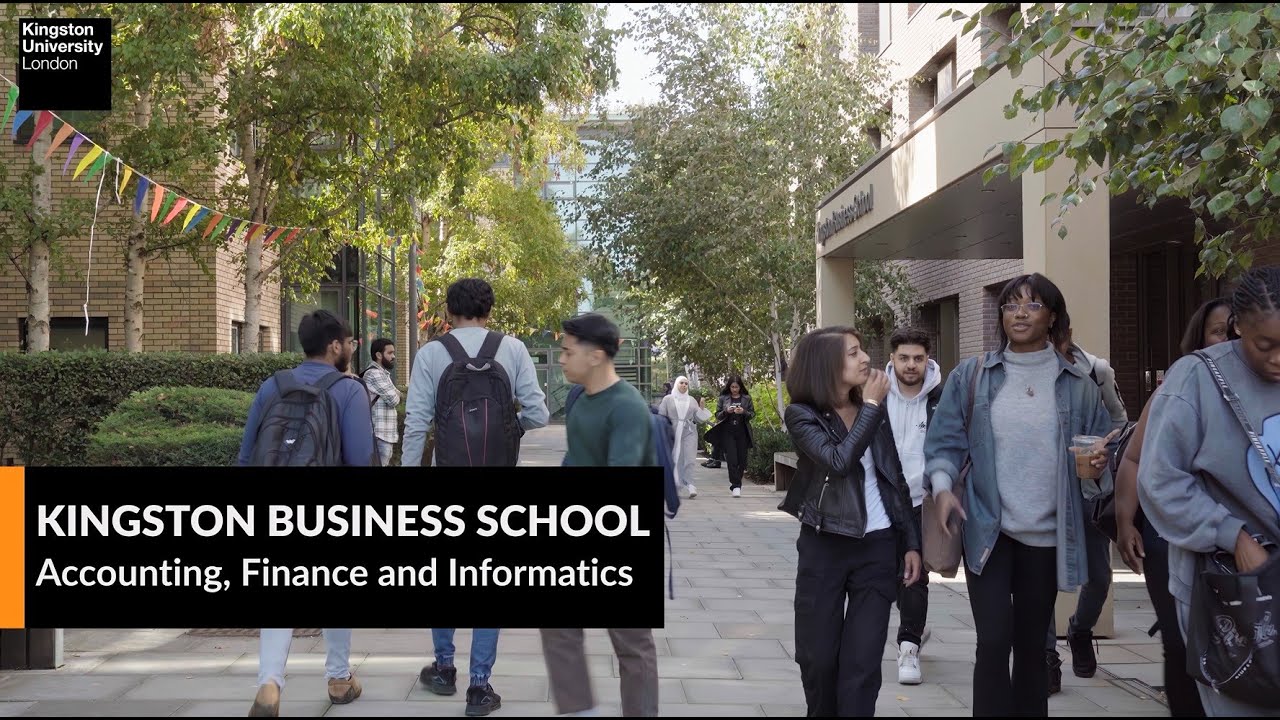
The Department of Accounting, Finance and Informatics delivers high quality degrees in accounting, banking, finance, investment, financial technology, risk management and real estate. Our courses are accredited by professional bodies including ACCA, CIMA, ACT, RICS and ICAEW.
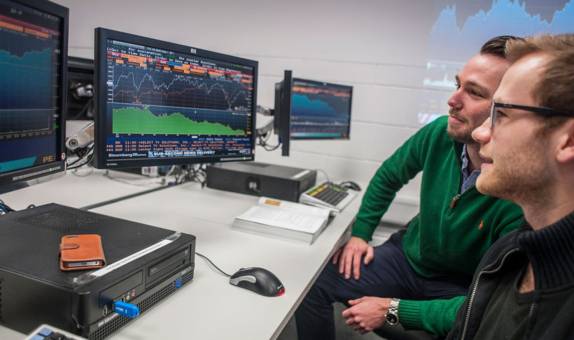
We are located on the doorstep of London – one of the world's largest financial hubs – where our partnerships with global organisations give you access to meaningful opportunities. We are one of only a few UK universities to have a Bloomberg Trading Room, providing you with a taste of working on a real trading floor.
What sets us apart?
Kingston Business School has three distinctive features that combine to set it apart from other universities:
Entrepreneurship and enterprise
Entrepreneurial thinking is in our DNA. Whether you want to be part of a start-up, or drive innovation within an organisation, at Kingston Business School you join a top business school for entrepreneurship.
We're rated the top most successful UK higher education institution for graduate start-up companies (Higher Education Business and Community Interaction Survey 2016). QS TopMBA.com rates us number one in world for MBA graduate start-ups.
From our Kingston Business Incubator to our work with the Small Business Charter Award scheme, at Kingston Business School we are trailblazers in nurturing and developing innovative thinking. We are also home to the internationally-recognised Small Business Research Centre, and everything we do is at the heart of the University's strategic plan to increase our societal influence and support SME growth and facilitating entrepreneurship opportunities in conjunction with local and regional groups.

International rankings, accreditations and membership
Kingston Business School has been awarded the prestigious international accreditation by the AACSB (Association to Advance Collegiate Schools of Business). This accreditation has been earned by just 5% of the world's business schools and recognises the high quality and standard of our business education.
Many courses are also accredited and recognised by professional bodies, including the Association of MBAs (AMBA), the European Foundation for Management Development (EFMD) EPAS, the Chartered Institute for Professional Development (CIPD), the Chartered Institute of Marketing (CIM) and the Royal Institution of Chartered Surveyors (RICS).



Facilities
Our purpose-built £26 million Business School was designed and constructed with sustainability in mind to reflect our commitment to inspiring, educating and developing students who will take their experiences of sustainable behaviour into their future work and careers.
It is home to our state-of-the-art Bloomberg trading room: a simulator for aspiring financiers, giving you a taste of working on a real trading floor. There is also the Kingston Business Incubator, a purpose-built room with facilities to help you start your own business. Postgraduate students can enjoy dedicated suites and work spaces, IT facilities and social areas.
The on-campus learning resource centre is open 24 hours a day during term time. It gives you access to libraries, study spaces and computer facilities, major texts, periodicals and computer learning packages, accessible from more than 200 networked workstations. You also have full access to the award-winning Town House building at the Penrhyn Road campus. Your study is supported with online learning tools such as the student intranet and Canvas that can be accessed on campus or at home.
The Kingston Hill campus is located in Kingston upon Thames, voted London's safest suburb and happiest place to live. The campus is just 30 minutes from the heart of central London, giving you access to the vibrancy, dynamism, and cultural diversity of one of the world's foremost business capitals.

Ready for business: our courses
We design our courses together with leading technology, manufacturing, service and financial organisations to ensure they align to the issues, challenges and needs of today's business. You gain the understanding, insight, skills and tools for real-world opportunities after graduation.
Undergraduate courses
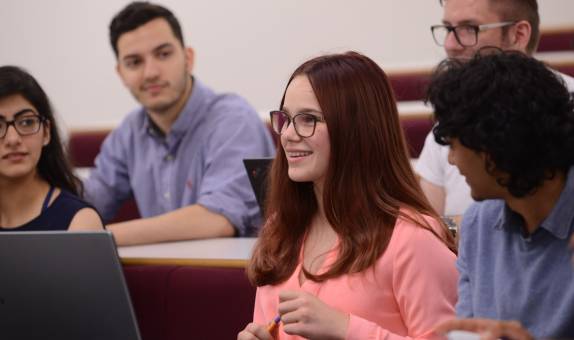
Studying at Kingston gives you a head start in your business career. Because we are pioneers in placing business readiness and business experience at the heart of all of our undergraduate programmes.
Business study + business readiness and experience = student success.

Postgraduate courses
We offer a wide range of postgraduate courses across a variety of business disciplines including management, marketing and communications, and the creative economy.
Whether you are looking to develop your existing career further, or potentially looking at a career change, our masters courses have been designed to meet the demands of today's organisations and the ever changing global economy.

The Kingston MBA
Whatever you are currently doing - from working as part of a large international organisation to laying the groundwork for your first business venture - a Kingston MBA will accelerate your career.
This modern, career-focused general management programme with strategy and leadership at its core is designed for people looking to enhance their business leadership and management skills.

Research degrees
Whether you are planning a career in academia or as a professional researcher, a Kingston Business PhD will enable you to develop your skills and knowledge and enhance your professional credibility.
Short courses and executive education
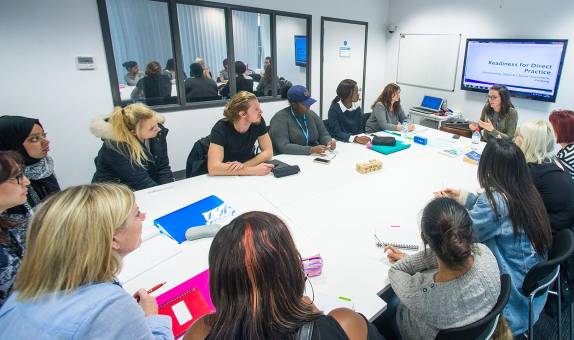
We also offer a variety of services, including short courses and work-based learning, both for individuals and companies.
Fostering innovation and impact: research culture at Kingston Business School
At Kingston Business School, we foster a dynamic research and knowledge exchange culture that drives innovation and societal impact. Our community of independent scholars leads this culture, collaborating with external partners and funders to generate fresh insights and contribute to the economy.
Experienced researchers and practitioners, along with emerging talents, collaborate closely to explore critical issues faced by responsible businesses in today's complex landscape. Our doctoral students bring a discerning viewpoint, addressing societal challenges and capitalizing on new opportunities.
This vibrant research environment is ingrained across all academic departments – Accounting, Finance and Informatics; Management; and Strategy, Marketing, and Innovation. Specialised hubs of excellence enhance focused research and knowledge exchange, engaging internal and external collaborators.
The Small Business Research Centre, with over 30 years of expertise, delves into the vital realm of small and medium-sized enterprises (SMEs). Given that around 99% of UK businesses have fewer than 50 employees (2016 data), studying and understanding this category remains crucial.
Our research groupings and broader studies are driven by academic interests and global concerns. Themes like sustainable entrepreneurship, responsible innovation, finance governance, consumer and employee behaviour, foresight, creativity, decision-making, and the future of work form a cohesive tapestry with local and global perspectives.
Empowering future research leaders
At Kingston Business School you can undertake a Business PhD or complete a PhD by prior publication/portfolio. Our goal is to produce future researcher leaders who can demonstrate excellence in their field, undertake collaborative work, and disseminate and publish leading outputs that can influence stakeholders.
Throughout your academic journey, you'll develop research skills, innovate, and tackle business challenges. We shape leaders who shine, foster collaboration, and shape stakeholder perspectives.
You can expect substantial guidance and research assistance: we aim for a lasting partnership, whether you continue in academia or venture into the corporate realm. Your success is our priority.
Sharing excellence through insights
Our academics excel in publishing across prestigious journals and various media. They actively contribute as editors and board members to diverse journals, enriching our expertise and external influence. In the recent UK Research Excellence Framework 2021 assessment, our research garnered international recognition, with 55% of our research activity and 50% of our research impact deemed world-leading or internationally excellent.
We are committed to sharing our insights widely, ensuring emerging knowledge benefits all. Many of our academics engage in consultancy services for businesses and governmental organisations. Our vibrant event calendar offers platforms to showcase work and foster collaborations. Guest speakers bring fresh perspectives to business and management research, with most events open to all interested parties, both within and outside our community.
Explore the School's research collection
Explore Kingston Business School's Research Publications in the Kingston University Research Repository. This repository houses a collection of working research papers from the school, accessible online. These working papers include ongoing projects by our academic staff and doctoral candidates.
If you encounter difficulties downloading a file or need a physical copy, don't hesitate to email our Research Operations Manager. For printed copies, a nominal fee (typically £10) will be levied to cover printing and postage expenses.
News








Contact the Business School
Kingston Business School
Kingston Hill campus
Kingston Hill
Kingston upon Thames
KT2 7LB
Tel: +44 (0)20 8417 9000
For individual faculty contacts, please see our staff directory.
Specific enquiries
Please select a category below for the contact details relating to a specific area.